

About · Sustainability report
Measuring the XRP Ledger's footprint, openly.
We measure the energy use and carbon footprint of the XRP Ledger, publish how we do it, and report the sustainability indicators the EU's MiCA regulation asks for — alongside our own annual impact reports.
- 12Paris–New York flights a year (network emissions)
- 123Emails' worth of CO₂ per transaction
- 20,000UK households' electricity a year
Annual reports
An impact-driven XRP Ledger ecosystem.
In 2024–2025, XRPL Commons strengthened its role in shaping an impact-driven XRP Ledger ecosystem, supporting initiatives that extend beyond innovation into measurable social, environmental, and economic outcomes.
Looking ahead to 2026, our priorities remain clear: to deepen impact finance and climate-focused initiatives, expand education and R&D programs, and strengthen collaborations across the ecosystem.

Sustainability
Measuring and reducing the ledger's environmental footprint.

Impact finance
Programs and partnerships with measurable social outcomes.

Open-source development
R&D collaborations and open-source tooling for the ecosystem.

Education, diversity & inclusion
Blockchain programs with UC Berkeley, IE Madrid, UCL and Trinity College Dublin.
Read the reports
Every year we publish what we did, what it achieved and what comes next.
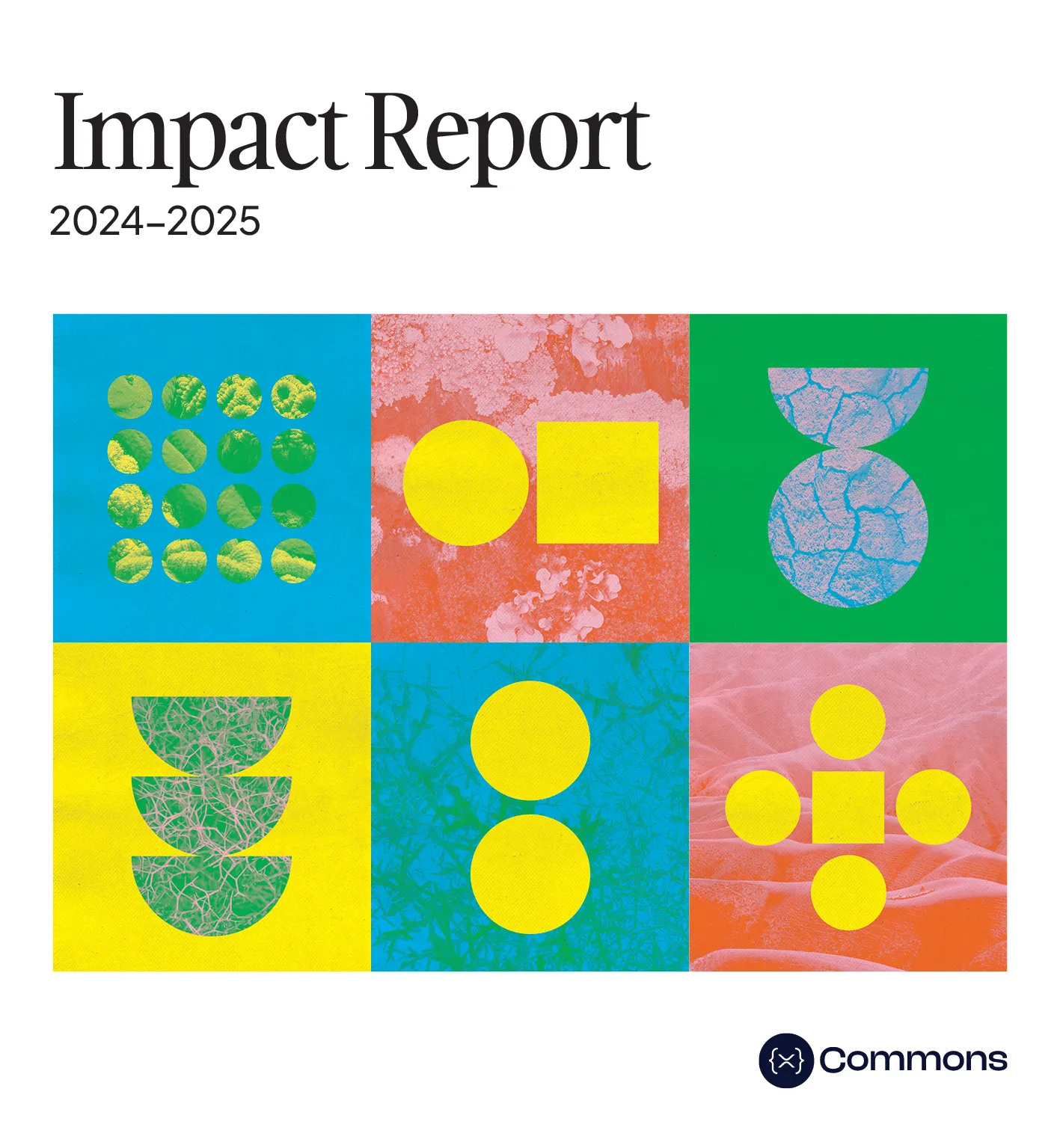
Annual report
2024-2025
In 2024–2025, XRPL Commons strengthened its role in shaping an impact-driven XRP Ledger ecosystem, supporting initiatives that extend beyond innovation into measurable social, environmental, and economic outcomes.
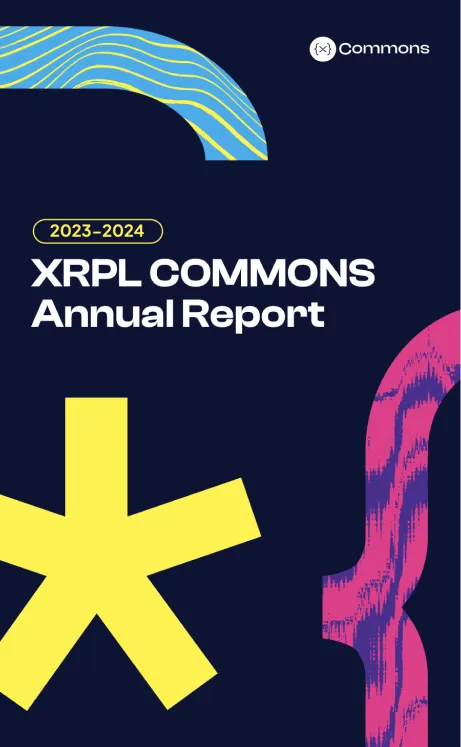
Annual report
2023-2024
In our first year, XRPL Commons has made significant steps in empowering the global XRP Ledger community through education, startup incubation, corporate adoption and community engagement. Our dedicated pillars — Learn, Build, Adopt, and Engage — have facilitated the launch of over 17 blockchain courses in partnership with prestigious universities, the onboarding of more than 120 developers to the XRP Ledger, and incubated 36 residents from diverse backgrounds in our Aquarium program. We’ve successfully hosted international hackathons, launched the XRPL Community Magazine, and fostered industry partnerships while emphasizing diversity and inclusion within our initiatives.
Why it matters
Sustainability data drives decisions
Understanding and assessing sustainability metrics is crucial for corporates, developers and investors.
Differentiator
Energy efficiency is key for decision-making by corporates, developers, and investors.

Mitigation
Proper data drives climate goals achievement via energy reduction and offsetting.

Transparency
Climate disclosure informs users, regulators, and the public about XRPL's environmental impact.
Regulation
Compliance with regulations like EU MiCA mandates climate impact disclosure.
Methodology
How we measure the ledger's footprint.
We are committed to advancing blockchain technology in a way that is both sustainable and responsible. This is our approach to measuring, mitigating, and transparently reporting the environmental impact of the XRP Ledger.
Direct emissions are calculated from known energy consumption directly linked to XRPL's primary operations. Indirect emissions include emissions from peripheral activities and secondary services that support the network.

Core scope
Primary network operations
Transaction validations, consensus activities and basic network functionality — the XRPL mainnet validators.
Extended scope
Peripheral activities
Node setups, additional services and network-associated operations, along the value chain from manufacturing equipment and building the site to electricity and cooling.
Five steps to a carbon footprint
- Step 01
Hardware selection
We analyze the network and its minimum hardware requirements to select a representative hardware sample.
- Step 02
Hardware measurement
Full nodes are run on all selected hardware devices, and their electricity consumption is measured.
- Step 03
Electricity consumption
We estimate total network electricity consumption by scaling measurement results with the total node count.
- Step 04
Performance metrics
The number of transactions gives the marginal electricity consumption per transaction.
- Step 05
Carbon footprint
Node locations are combined with emission factors to calculate the network's carbon footprint.
MiCA indicators
Sustainability disclosures for the XRP Ledger
MiCA (Markets in Crypto-Assets) regulation defines roles and responsibilities for entities within the crypto ecosystem. Among other requirements, crypto-asset service providers (CASPs) and crypto-asset issuers must disclose the sustainability metrics of their currencies. Shares are given as decimals (0.32 = 32%).
- Gas33.1%
- Wind16.6%
- Coal15.7%
- Nuclear14.7%
- Hydro7.6%
- Other fossil4.1%
- Solar4%
- Bioenergy3.7%
- Other renewables0.4%
Sources and methodology
Data provided by


Get involved
A community project
Making the XRPL protocol more sustainable is a community project. We collaborate with environmental experts and other blockchain networks to share best practices, and we publish regular updates on our sustainability work.
Community members
Join our regular discussions to identify and implement decarbonisation levers, share best practices and empower virtuous business models.
Validators
Fill in our Validator Data Request. It helps us understand the energy consumption of the XRPL network — your input is indispensable.