

Build
Everything you need to learn, build and stay ahead.
Whether you're exploring the XRP Ledger for the first time or scaling an enterprise solution, here you'll find the essential blockchain and crypto resources.
I'd like to

Learn about XRPL
Explore at your own pace with guides and tutorials, or join a live training session or a bootcamp to go from beginner to core developer.
I have a project
Get support testing your idea and schedule office hours with our technical team.
I'm integrating for my company
Connect with our enterprise team for technical guidance and integration support.
Get started in 15 minutes
Follow a structured curriculum from beginner to certified XRPL developer. Each stage builds on the previous one.
Send your first XRP transaction in 15 minutes.
Set up a secure XRPL wallet and keypair.
Fund your wallet with testnet or devnet XRP.
Learn how blockchain apps work on XRPL, with runnable code samples.



Developer tools
The tools we use every day to inspect, test and debug on the XRP Ledger.
View validations of new ledger versions in real-time, or chart the location of servers in the XRP Ledger.
Get free test XRP on Testnet and Devnet to try transactions without spending real funds.
Send API requests to a live server from your browser and read the responses as they arrive.
Send test payments to any address on Testnet or Devnet to check how your app handles them.
In production
What teams build on XRPL
From cross-border payments to tokenized real-world assets, teams ship real products on the XRP Ledger. Here is where most of them start.
Low-cost, few-second settlement and native issuance for payments, remittances and stablecoins like RLUSD.
The native DEX, an automated market maker and single-asset vaults — the building blocks for on-chain finance.

Tokenization
Real-world assets (opens in a new tab)
Issue and transfer tokenized assets with built-in compliance, credentials and permissioned domains.
The XRPL EVM sidechain for Solidity, and native agentic payments for the next wave of AI apps.
Trusted across the ecosystem
Builders ship real products on XRPL.
From first-time hackathon teams to institutions moving value at scale, the XRP Ledger runs in production — around the clock, since 2012.
- 01
Payments & stablecoins
Cross-border settlement in seconds, native issuance and RLUSD.
- 02
DeFi
The native DEX, an AMM and single-asset vaults.
- 03
Tokenization
Real-world assets with compliance built into the protocol.
- 04
EVM & AI agents
Solidity on the XRPL EVM sidechain, and native agentic payments.
Need to accelerate your project?
The Startup Program is our 9-week incubator for teams taking an XRPL product from MVP to mainnet.

Events & Insights

Magazine
Real-World Utility
The new XRPL Community Magazine is here. In this issue, we focus on real-world utility, and how blockchain and the XRPL are making an impact in practice.
Listen
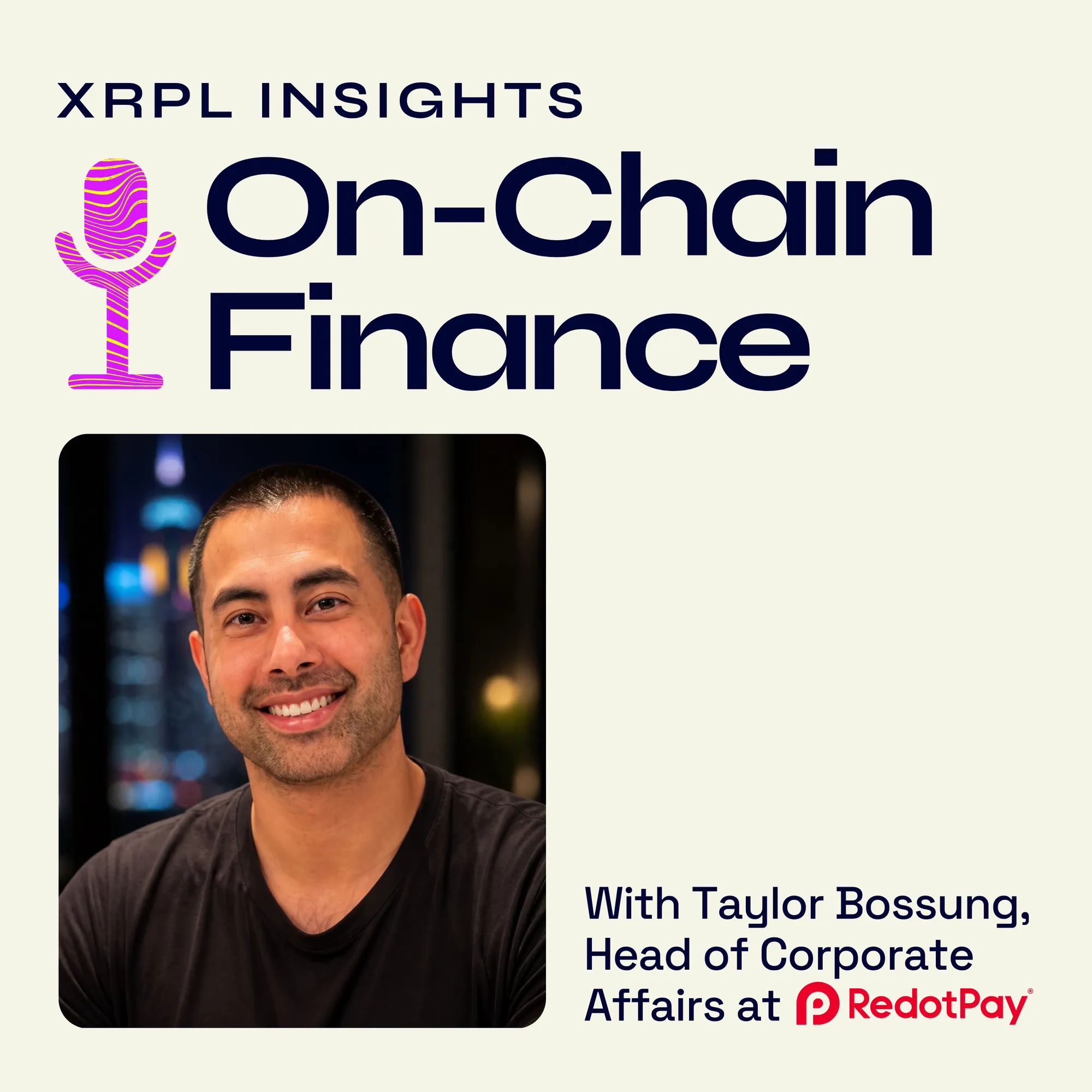
On-Chain Finance - Interview with RedotPay
Taylor Bossung, Head of Corporate Affairs at RedotPay, joins Odelia Torteman, Head of Digital Assets at XRPL Commons, to explain how the XRP Card works, why RedotPay built on the XRP Ledger, and what the product means for payments and on-chain commerce.
Read
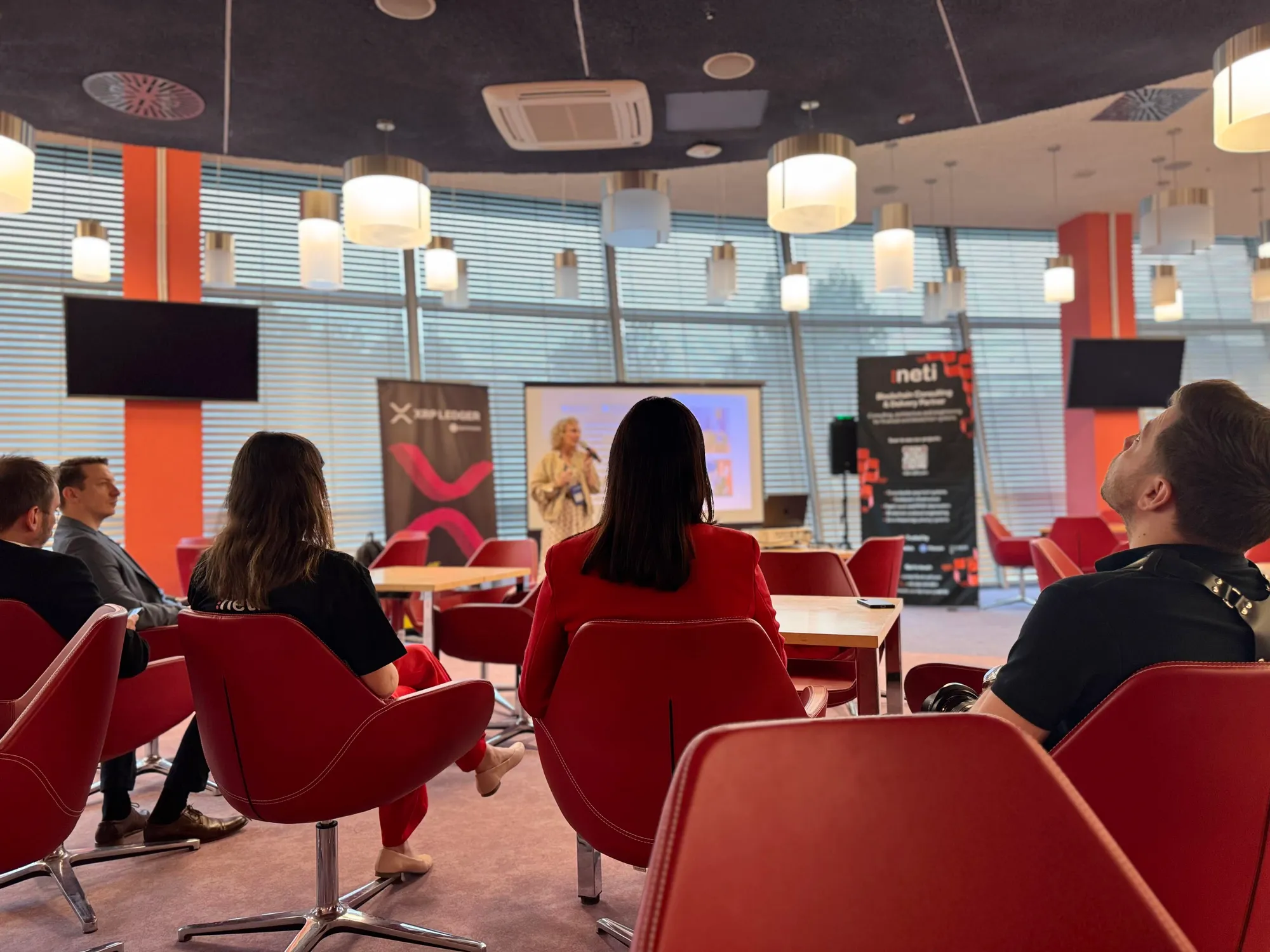
Scaling the XRP Ledger in Poland: Insights from Our Carpathian Startup Fest Business Breakfast
Blockchain adoption doesn't happen at the protocol level — it happens when global infrastructure meets local ecosystems. Here's how XRPL Commons and Neti brought that conversation to one of Europe's fastest-growing innovation hubs.
Frequently asked questions
A blockchain gives every party the same record without a central operator to trust or reconcile against. On the XRP Ledger that record settles in seconds, at a fraction of a cent per transaction.
Payments, a decentralized exchange, token issuance and escrow are built into the protocol rather than written as smart contracts. Transactions settle in 3–5 seconds, fees are tiny, and the ledger has run without interruption since 2012.
Start with the quickstart to send a first transaction, then use the Academy's guided journeys to go deeper. When you have a prototype, office hours and the Startup Program help you take it to mainnet.
Official libraries exist for JavaScript/TypeScript (xrpl.js), Python (xrpl-py) and Java (xrpl4j), with community libraries for Go, Rust, Ruby and more. Any language that speaks JSON over WebSocket or HTTP can call the API directly.
Testnet and Devnet are free. On mainnet the standard transaction cost is a fraction of a cent, and an account needs a small XRP reserve to exist.
Yes. Most teams add XRPL to an existing stack through one of the client libraries or the public API, without replacing what they already run. Our enterprise team can help you scope the integration.
Documentation and quickstarts, the Academy's courses and live sessions, office hours with our developer relations team, hackathons, and the Startup Program for teams ready to scale.
A first transaction takes minutes and a working prototype a few weeks. Taking a product to mainnet usually takes a few months; the Startup Program's 9-week sprint is designed to shorten that.