

Article
What’s New on the XRP Ledger
The XRP Ledger is evolving fast—and the next wave of features is already reshaping how developers build, transact, and innovate. Dive into our latest blog to explore new amendments live on test networks and one groundbreaking upgrade now active on the mainnet.

What’s New on the XRP Ledger
The XRP Ledger is a blockchain in constant evolution, with new features regularly deployed across its various test networks.
We invite you to explore three features currently under testing and discussion within our community—along with one that has just been activated on the main network (mainnet).
To make it easier for you to test these new features, we’ve created a dedicated site that brings together all of these amendments, and likely more to come.
Batch
The XLS-56 amendment enables atomic transaction processing on the XRP Ledger, allowing multiple transactions to be executed together as a single unit.
This eliminates the risk of partial execution and enables complex operations that were previously limited by the lack of native atomic execution.
Different batch modes are supported, and multi-account transactions are secured with consistent fee and sequence handling.
This strengthens the reliability, security, and flexibility of grouped operations on XRPL.
Explore and Test Batch Transactions
Smart Escrow
With XLS-85, the escrow functionality on the XRP Ledger is extended to support fungible tokens beyond XRP, including IOUs and MPTs.
Flexible settlement mechanisms are available for issuers and token holders, while still respecting issuer controls such as transfer restrictions, authorization, and freeze/lock conditions.
Some limitations remain—for example, issuers cannot escrow their own tokens, and clawbacks cannot occur while an escrow is active.
This amendment enhances the security and flexibility of escrow operations on XRPL.
Permissioned DEXes
The introduction of permissioned DEXes on the XRP Ledger allows users to create domains that restrict trading to specific conditions (represented by credentials). Essentially, it operates as a limited order book.
Notably, access is not controlled by the token’s issuer but by the domain issuer.
This secure framework ensures compliance with transfer restrictions, authorizations, and freeze/lock conditions defined by issuers.
It improves transaction flexibility and security while providing granular control over assets on XRPL.
Explore and Test Permissioned DEXes
MPTokensV1
Already activated on the XRP Ledger, XLS-33 introduces Multi‑Purpose Tokens (MPTs)—a new standard that builds on and improves the trust line‑based token system.
It offers a simpler, more efficient, and flexible infrastructure for creating fungible tokens, suitable for use cases such as stablecoins, loyalty points, or real‑world assets (RWAs).
This model optimizes token management, issuance, and transfers across the XRPL network.
We hope this overview of the latest developments on the XRP Ledger gives you a clear insight into the upcoming features.
Feel free to explore our test site, try out these new functionalities, and share your feedback with the community.
Your experience and comments are essential to helping the XRPL ecosystem evolve!
Keep reading
More from Insights
Read
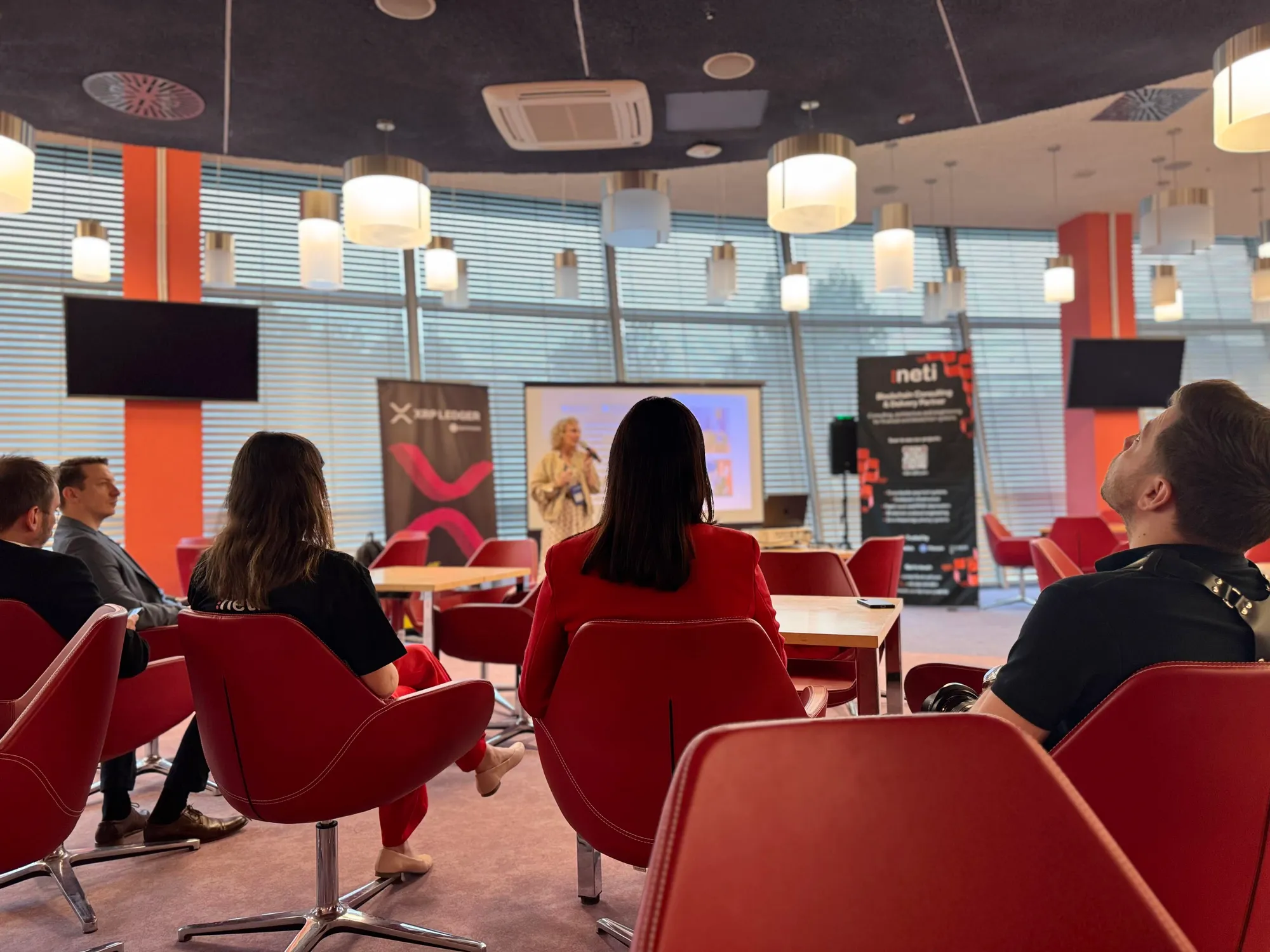
Scaling the XRP Ledger in Poland: Insights from Our Carpathian Startup Fest Business Breakfast
Blockchain adoption doesn't happen at the protocol level — it happens when global infrastructure meets local ecosystems. Here's how XRPL Commons and Neti brought that conversation to one of Europe's fastest-growing innovation hubs.

Read
Where Research Meets the Real World. Recapping the XRPL Blockchain Research Summit 2026
The Blockchain Research Summit 2026 confirmed that academic blockchain research has moved beyond theory, with live demos, ZK-proof architectures, and deployable systems now sitting alongside policy and curriculum debates. Here is what two days of working groups, PhD showcases, and cross-sector dialogue revealed about where decentralised infrastructure is actually heading.

Read
From NFC to XRPL: Our First Meetup in Lisbon
What happens when blockchain meets Lisbon's buzzing startup scene? XRPL Commons brought together 70 founders, developers, and builders for their very first meetup in Portugal — and it was only the beginning.